
Executive Summary
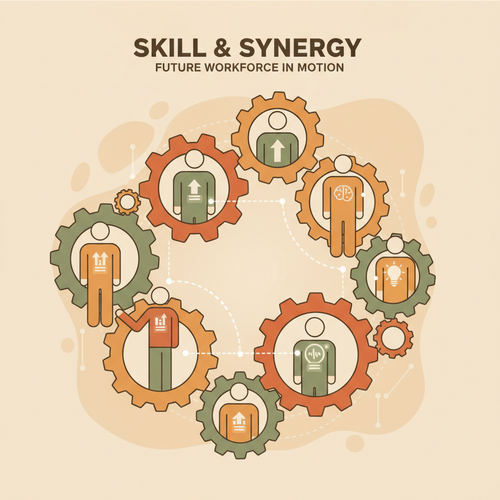
- Scalable micro-credential ecosystems represent a pivotal shift in enterprise human capital strategy.
- They enable dynamic skill acquisition, fostering workforce agility and competitive advantage.
- Organizations can achieve significant human capital optimization and strategic workforce arbitrage through precise competency alignment.
Micro-Credential Frameworks: Redefining Enterprise Competency Development
Micro-credentials offer granular validation of specific skills. They certify discrete competencies. This approach contrasts sharply with traditional, broader qualifications. Enterprises leverage these frameworks for targeted talent development. It directly addresses evolving skill requirements.
Implementing a robust micro-credential framework demands careful planning. Organizations must define clear skill taxonomies. These taxonomies align directly with business objectives. They ensure all training investments yield measurable returns.
The agility afforded by micro-credentials is paramount. Businesses can rapidly deploy upskilling or reskilling initiatives. This responsiveness mitigates skill obsolescence risks. It enhances overall organizational resilience.
Designing Granular Skill Taxonomies for Strategic Alignment
Effective micro-credential systems begin with precise skill taxonomy design. This involves deconstructing complex roles into core competencies. Each competency can then be individually certified. Such granularity allows for highly targeted interventions.
These taxonomies must be dynamic. They require regular review and updates. Market shifts and technological advancements necessitate constant adaptation. This ensures the credentialing remains relevant and valuable.
Integrating AI-driven skill mapping tools can accelerate this process. These tools identify emerging skill gaps proactively. They suggest relevant micro-credential pathways. This augments human capital planning capabilities significantly.
Operationalizing Scalable Micro-Credential Ecosystems: Technology and Integration
Building a scalable micro-credential ecosystem requires robust technological infrastructure. Learning Management Systems (LMS) and Learning Experience Platforms (LXP) are foundational. They host and deliver credentialing pathways. Seamless integration across HR tech stacks is critical.
Blockchain technology offers immutable credential verification. This enhances trust and security. It simplifies credential portability across internal and external systems. Distributed ledger technology (DLT) ensures authenticity.
Data analytics capabilities are essential. They track progress, identify bottlenecks, and measure impact. Real-time dashboards provide actionable insights. These insights inform continuous program improvement.
Leveraging AI and Automation in Credential Pathway Management
Artificial intelligence streamlines credential pathway management. AI algorithms personalize learning journeys. They recommend relevant micro-credentials based on individual profiles. This optimizes engagement and completion rates.
Automation reduces administrative overhead. It automates enrollment, progress tracking, and certificate issuance. This frees HR professionals for strategic initiatives. Operational efficiency improves markedly.
Predictive analytics forecasts future skill demands. It identifies talent pools needing specific development. This proactive stance supports long-term workforce planning. It minimizes reactive hiring cycles.
Enterprise Human Capital Optimization: Quantifying Value and Impact
Human capital optimization through micro-credentials is not merely qualitative. It yields measurable returns on investment (ROI). Reduced external recruitment costs represent one key metric. Enhanced internal talent mobility is another significant benefit.
Improved employee engagement and retention directly correlate with development opportunities. Micro-credentials provide clear career progression paths. This fosters a culture of continuous learning. Employee satisfaction increases.
Productivity gains are often substantial. Targeted skill acquisition directly impacts performance. Employees apply newly certified competencies immediately. This translates to operational improvements and innovation.
Measuring ROI: Key Performance Indicators for Micro-Credential Initiatives
Establishing clear Key Performance Indicators (KPIs) is vital for measuring ROI. These include time-to-competency reduction. Internal promotion rates also serve as an important indicator. Skill gap closure percentages are critical.
Financial metrics such as cost savings from reduced external hiring are quantifiable. Increased project success rates can also be attributed. Employee churn reduction provides direct financial benefits. These metrics validate program efficacy.
Consider measuring the impact on critical business functions. Faster product development cycles might result. Improved customer satisfaction scores could also reflect enhanced employee skills. Data-driven insights are paramount.
Strategic Workforce Arbitrage: Global Talent Mobility and Competitive Advantage
Workforce arbitrage involves strategically allocating talent based on skills and cost efficiencies. Micro-credential ecosystems facilitate this process. They create a transparent, verifiable skill inventory. This enables optimal resource deployment.
Organizations can identify internal talent for new projects. They can fill critical roles rapidly. This reduces reliance on expensive external consultants. It optimizes the total cost of ownership (TCO) for human capital.
Global talent mobility becomes more streamlined. Micro-credentials offer universal recognition of skills. This simplifies cross-border talent deployment. It fosters international workforce flexibility.
Unlocking Global Talent Pools with Verifiable Competencies
Verifiable micro-credentials transcend geographical boundaries. They provide a common language for skills. This allows companies to tap into diverse global talent pools. It removes ambiguity regarding capabilities.
Companies can identify specific skill sets in different regions. They can then optimize resourcing decisions. This strategic advantage enables greater market penetration. It supports agile expansion efforts.
Remote work models further amplify this capability. Micro-credentialed employees can contribute from anywhere. This expands the available talent pool exponentially. It creates true talent liquidity.
Regulatory Compliance and Accreditation Standards for Digital Credentials
Navigating regulatory landscapes is crucial for digital credentials. Data privacy regulations, like GDPR or CCPA, demand strict adherence. Secure handling of personal data is non-negotiable. General Data Protection Regulation (GDPR) compliance is essential for global operations.
Accreditation standards ensure credibility and acceptance. Industry-specific certifications often require external validation. Partnering with recognized educational bodies can lend legitimacy. This builds trust in the credentialing system.
Legal frameworks for digital signatures and intellectual property must be considered. Verifiable credentials have legal implications. Ensuring compliance protects both the organization and the credential holder.
Ensuring Trust and Validity in Digital Credentialing
Establishing trust in digital credentials is paramount. Robust security protocols prevent fraud and tampering. Immutable records, often via blockchain, are highly effective. This guarantees the integrity of earned competencies.
Transparency in assessment methodologies builds confidence. Clear evaluation criteria must be communicated. This ensures fairness and objectivity. It validates the rigor of the credentialing process.
Regular audits and quality assurance checks are necessary. They confirm ongoing compliance and effectiveness. This proactive approach maintains the high standards of the ecosystem. It protects the value of each micro-credential.
Future Outlook: Hyper-Personalized Learning and Predictive Skill Evolution
The future of micro-credential ecosystems points toward hyper-personalization. AI and machine learning will tailor learning pathways precisely. These systems will adapt in real-time. They will optimize for individual learning styles and career aspirations.
Predictive analytics will forecast skill evolution with greater accuracy. Organizations can then proactively develop future-ready workforces. This moves beyond reactive training. It creates a truly adaptive human capital strategy.
Integration with augmented reality (AR) and virtual reality (VR) will enhance experiential learning. These immersive environments provide practical application. They solidify skill acquisition. The learning experience becomes more engaging and effective.
Blockchain and Decentralized Identity in Micro-Credentialing
Blockchain’s role will expand beyond mere verification. Decentralized Identity (DID) solutions will empower individuals. They will own and manage their own skill records. This shifts control from institutions to individuals.
Smart contracts can automate credential issuance and revocation. This increases efficiency and reduces manual errors. It streamlines the entire lifecycle of a micro-credential. Transparency and auditability improve.
The interoperability of blockchain-based credentials will unlock new possibilities. Skills gained in one ecosystem can be seamlessly recognized elsewhere. This creates a truly global and liquid talent marketplace. Human Capital Management (HCM) will transform.
Conclusion
Scalable micro-credential ecosystems offer a transformative paradigm for enterprise human capital. They optimize workforce capabilities with unparalleled precision. Organizations gain a decisive competitive edge through strategic talent deployment. This model ensures agility in dynamic market conditions.
Embracing these ecosystems is not merely an HR initiative. It is a strategic imperative for long-term growth. The integration of advanced analytics and AI will further refine their impact. How will your organization leverage micro-credentials to unlock its full human capital potential?