
Executive Summary
- Quantitative endowment management leverages advanced econometrics. It optimizes multi-asset allocation and liquidity sequencing.
- This systematic approach enhances long-term capital preservation. It also aims for sustainable growth objectives.
- Sophisticated models mitigate market volatility. They address complex spending requirements effectively.
The Imperative of Quantitative Endowment Management in Modern Portfolios
Endowments represent significant, long-duration capital pools. Their stewardship demands rigorous financial discipline. Traditional management paradigms often fall short. They struggle with contemporary market complexities. A shift towards quantitative methodologies becomes essential. This ensures robust portfolio resilience.
Modern endowments face unique challenges. These include fluctuating donor contributions. They also contend with dynamic spending policies. Inflationary pressures and global market interconnectedness add layers of complexity. Quantitative frameworks provide a systematic advantage. They offer data-driven insights for optimal decision-making. This approach moves beyond heuristic investment strategies. It embraces empirical rigor for enhanced alpha generation.
Econometric Liquidity Sequencing: Unpacking Cash Flow Dynamics
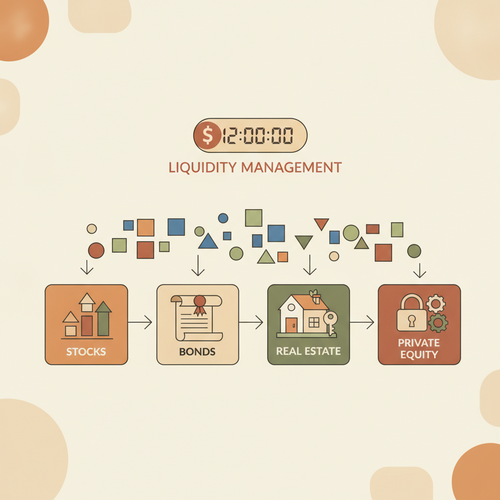
Effective liquidity management is paramount for endowments. It directly impacts their operational viability. Econometric liquidity sequencing forecasts future cash inflows and outflows. This process integrates stochastic models. It predicts capital calls and distribution needs. ARCH and GARCH models analyze volatility clustering in cash flows. This provides more accurate prediction intervals.
Illiquid alternative investments often complicate liquidity profiles. Private equity and venture capital carry inherent redemption restrictions. Econometric models help simulate various capital call scenarios. They inform strategic allocations to liquid assets. This ensures obligations are met without forced asset sales. Optimal spending policies can then be sustained. This protects long-term capital appreciation.
Expert Insight: Managing liquidity involves discerning endogenous versus exogenous shocks. Endogenous shocks arise from portfolio rebalancing. Exogenous events include donor policy changes or market crises. Differentiating these allows for targeted risk mitigation.
Granger causality tests assess lead-lag relationships. They identify drivers of cash flow volatility. Cointegration analysis reveals long-term relationships. It links spending rates to market performance. These advanced techniques provide a granular view. They allow for proactive liquidity risk management. This optimizes the endowment’s long-term financial health.
Multi-Asset Allocation Architectures: Beyond Static Portfolios
Multi-asset allocation is the cornerstone of endowment investing. It diversifies risk across various asset classes. Traditional strategic asset allocation (SAA) sets static targets. However, dynamic tactical asset allocation (TAA) adapts to market conditions. Quantitative models enhance both approaches. They provide forward-looking insights for portfolio construction.
Factor-based allocation has gained prominence. It disaggregates returns into systemic risk premia. These include value, momentum, size, and quality factors. Endowments can target specific factor exposures. This enhances diversification benefits. It improves risk-adjusted returns over extended periods. Risk parity strategies aim for equal risk contribution. They balance asset class allocations based on volatility.
Alternative assets play a critical role. Private equity, hedge funds, and real estate offer diversification. They can also provide enhanced returns. Quantitative models assess their true correlation properties. They account for illiquidity discounts. This holistic view ensures optimal portfolio integration. It balances risk and return objectives effectively.
| Allocation Strategy | Key Characteristic | Quantitative Enhancement |
|---|---|---|
| Strategic Asset Allocation (SAA) | Long-term, static targets | Stochastic optimization for target setting |
| Tactical Asset Allocation (TAA) | Short-term, dynamic adjustments | Regime-switching models for market timing |
| Factor-Based Allocation | Exposure to systematic risk premia | Factor momentum, cross-sectional analysis |
Stochastic Optimization and Dynamic Rebalancing Algorithms
Endowment portfolios require continuous adjustment. Market conditions evolve constantly. Stochastic optimization models generate optimal asset weights. They consider various future economic scenarios. Monte Carlo simulations project portfolio performance. They quantify potential outcomes under uncertainty. This provides a robust framework for decision-making.
Dynamic rebalancing ensures portfolio targets are maintained. It prevents significant drift from optimal allocations. Rebalancing triggers can be time-based or threshold-based. Volatility-driven rebalancing also features prominently. It adjusts positions more frequently during turbulent periods. This minimizes tracking error against strategic benchmarks.
Transaction costs and market impact are critical considerations. High-frequency rebalancing can erode returns. Quantitative algorithms optimize trade execution. They minimize slippage and commissions. This preserves alpha generation. It maintains the integrity of the asset allocation strategy. Adaptive models learn from market microstructure. They refine rebalancing parameters dynamically.
Risk Mitigation and Tail Event Management in Endowment Portfolios
Risk management is foundational to endowment success. It protects against capital impairment. Value at Risk (VaR) and Conditional Value at Risk (CVaR) quantify downside risk. Stress testing models simulate extreme market events. They reveal potential portfolio vulnerabilities. These tools are indispensable for robust risk oversight.
Tail risk hedging strategies are crucial. They protect against rare, high-impact events. Options and futures contracts can provide portfolio insurance. Structured products offer customized risk-return profiles. Diversification alone often proves insufficient. It fails during systemic market dislocations. Proactive hedging enhances portfolio robustness significantly.
Market Warning: Black swan events defy historical data. Traditional risk models may understate their probability. Scenario analysis must include fat-tailed distributions. This accounts for unforeseen market discontinuities.
Concentration risk also merits close attention. Over-reliance on a few managers or asset classes is dangerous. Quantitative methods identify hidden correlations. They expose single points of failure. Systemic risk contagion can be modeled. This comprehensive approach safeguards endowment capital. It ensures long-term mission fulfillment.
Implementation Challenges and Technological Advancements
Implementing quantitative endowment management is complex. It demands robust data infrastructure. High-quality, clean data is paramount. Computational power for complex simulations is also required. Cloud computing solutions offer scalable resources. This facilitates advanced analytical workflows. Robust IT architecture underpins successful execution.
Model risk remains a significant concern. All models are simplifications of reality. Parameter uncertainty can lead to flawed outputs. Regular model validation is therefore essential. Backtesting and out-of-sample testing are critical. They ensure model robustness across various market regimes. Expert human oversight provides critical qualitative judgment.
Artificial Intelligence (AI) and Machine Learning (ML) are transformative. They enhance predictive analytics capabilities. ML algorithms can identify non-linear patterns. These often escape traditional econometric models. Deep learning techniques forecast market movements. They optimize trade execution. This integration signifies the next frontier. It promises further efficiencies in endowment management.
Case Study Vignettes: Applying Quantitative Rigor
Consider a large university endowment. Its long-term liabilities include academic programs. Quantitative models optimize its spending policy. They balance current needs with future growth. Econometric liquidity sequencing ensures capital calls are met. This avoids premature liquidation of private assets.
Another example involves a charitable foundation. Its mandate requires steady distributions. Multi-asset allocation, guided by factor models, diversifies risk. It also targets specific return drivers. Dynamic rebalancing algorithms minimize volatility. They maintain portfolio integrity during market turbulence. This systematic approach ensures sustained philanthropic impact.
Conclusion
Quantitative endowment management represents the pinnacle of institutional investing. It integrates econometric liquidity sequencing. It deploys sophisticated multi-asset allocation. This framework offers unparalleled precision and adaptability. Endowments navigate volatile markets with greater confidence. They fulfill their intergenerational missions more effectively. The future of endowment stewardship is undeniably quantitative.
Are you ready to elevate your endowment’s financial strategy? What specific quantitative challenges does your institution face today?