
Executive Summary
- Institutional debt issuance protocols represent a paradigm shift in fixed-income markets.
- These decentralized frameworks offer enhanced transparency, efficiency, and broader access for yield generation.
- Key components include tokenized securities, smart contract automation, and robust on-chain governance mechanisms.
The Evolution of Debt Capital Markets: From Traditional to Digital Frameworks
Traditional debt capital markets operate through established, often bureaucratic, channels. Issuance processes involve numerous intermediaries and significant lead times. Legacy infrastructure frequently impedes efficiency and transparency. Furthermore, access can remain restricted to a select cohort of large institutional players. This inherent friction often translates into higher operational costs.
Recent technological advancements challenge these long-standing conventions. The advent of blockchain and distributed ledger technology (DLT) introduces novel paradigms. Digital frameworks promise to streamline operations and enhance market liquidity. They offer a direct bridge between issuers and investors. This reduces dependency on central clearing houses and traditional custodians. The digital transformation of debt is now moving at an accelerated pace.
Core Mechanics of Institutional Debt Issuance Protocols
Institutional debt issuance protocols leverage blockchain technology for their fundamental operations. These protocols facilitate the creation and management of tokenized debt instruments. Each token represents a fractional ownership or claim on the underlying debt. This enhances divisibility and transferability significantly. Smart contracts form the operational backbone.
Smart contracts automate the entire debt lifecycle. This includes initial issuance, interest payments, and eventual redemption. They enforce predefined terms and conditions without human intervention. This minimizes counterparty risk and operational overhead. Smart contracts execute automatically when specific conditions are met. This ensures programmatic certainty in debt obligations.
Decentralized Autonomous Organizations (DAOs) can govern these protocols. DAOs provide a transparent and community-driven governance model. This allows stakeholders to vote on protocol upgrades and critical decisions. On-chain asset representation typically involves direct tokenization. Off-chain assets are often represented through legally binding wrappers. These wrappers ensure legal enforceability of digital claims. This hybrid approach bridges traditional and digital asset classes effectively.
Yield Generation Strategies: Unlocking Alpha in Digital Fixed Income
Institutional debt issuance protocols open new avenues for fixed-income yield generation. Tokenized bonds offer enhanced liquidity compared to their traditional counterparts. Their fractional ownership facilitates easier secondary market trading. This dynamic environment can lead to tighter bid-ask spreads. Investors gain greater flexibility in portfolio management and rebalancing strategies.
Liquidity pools within these protocols enable continuous trading of tokenized debt. These pools allow investors to earn fees by providing liquidity. This passive income stream supplements traditional coupon payments. Structured products can also be built on-chain. These bespoke instruments offer tailored risk-reward profiles. They cater to specific institutional investment mandates.
Arbitrage opportunities frequently emerge across traditional and digital markets. Price discrepancies between tokenized and conventional debt can be exploited. This requires sophisticated algorithms and real-time data feeds. Yield farming strategies also apply to digital fixed income. Lenders can deposit tokenized debt into protocols to earn additional yield. This incentivizes participation and deepens market liquidity.
Expert Insight: “The true innovation lies in the composability of these digital debt instruments. They can be seamlessly integrated into broader DeFi ecosystems, unlocking unprecedented yield layering opportunities for sophisticated investors.”
Risk Mitigation and Regulatory Compliance in Decentralized Debt
Risk mitigation is paramount within decentralized debt markets. Smart contract security audits are non-negotiable. Independent third-party firms scrutinize code for vulnerabilities. This robust review process safeguards against potential exploits. Comprehensive legal frameworks are also evolving rapidly. Jurisdictions are adapting existing securities laws to accommodate tokenized assets. Clarity in regulatory guidance is crucial for institutional adoption.
Know Your Customer (KYC) and Anti-Money Laundering (AML) protocols remain critical. While decentralized, institutional platforms often implement strict compliance checks. These measures ensure adherence to global financial regulations. They prevent illicit activities within the ecosystem. Operational risks also require careful consideration. These include oracle failures or network congestion. Robust governance models address these challenges proactively.
Decentralized finance (DeFi) offers inherent transparency. All transactions are immutable and publicly verifiable on the blockchain. This reduces information asymmetry. However, it also demands sophisticated data analysis capabilities. Institutions must develop robust internal frameworks. These frameworks identify and manage unique digital asset risks. Stress testing protocol resilience is an ongoing requirement.
Case Studies and Practical Applications: Real-World Implementations
Several pioneering initiatives demonstrate the potential of institutional debt protocols. One notable example involves tokenizing real estate-backed debt. This allows fractional ownership of high-value assets. It expands the investor base beyond traditional accredited investors. Small and medium-sized enterprises (SMEs) can also access capital more efficiently. They bypass traditional banking bottlenecks and high fees.
Supply chain finance benefits significantly from these protocols. Invoice tokenization provides immediate liquidity to suppliers. This optimizes working capital management across complex global networks. Central banks and financial institutions are also exploring wholesale central bank digital currencies (CBDCs). These could underpin future digital bond markets. Pilot programs are validating the technical feasibility and operational benefits.
Another application involves syndicated loans on-chain. This streamlines the complex process of multiple lenders participating. Smart contracts automate disbursement and repayment schedules. This reduces administrative burdens significantly. These diverse use cases highlight the versatility of institutional debt issuance protocols. They are not merely theoretical constructs but practical solutions addressing market inefficiencies.
Technological Underpinnings: Blockchain Architecture and Interoperability
The choice of blockchain architecture significantly impacts protocol performance. Permissioned blockchains offer controlled access and enhanced privacy. These are often preferred by large institutions for compliance reasons. Conversely, public permissionless blockchains prioritize decentralization and censorship resistance. Hybrid models often seek to balance these attributes. They combine the best features of both architectures.
Interoperability is a critical factor for widespread adoption. Protocols must communicate seamlessly across different blockchain networks. Cross-chain bridges facilitate asset and data transfers. This prevents market fragmentation and enhances overall liquidity. Oracle services provide vital off-chain data feeds. These include market prices, interest rates, and credit ratings. Reliable oracles ensure smart contracts execute with accurate, real-world information.
Scalability solutions are constantly evolving. Layer 2 protocols and sharding techniques enhance transaction throughput. This addresses the challenge of supporting high-frequency institutional trading. The underlying cryptographic security ensures data integrity. Secure private key management is essential for asset custody. Institutions are actively developing advanced custodial solutions. These mitigate the risks associated with digital asset storage.
Future Outlook: Market Convergence and Disruption Potential
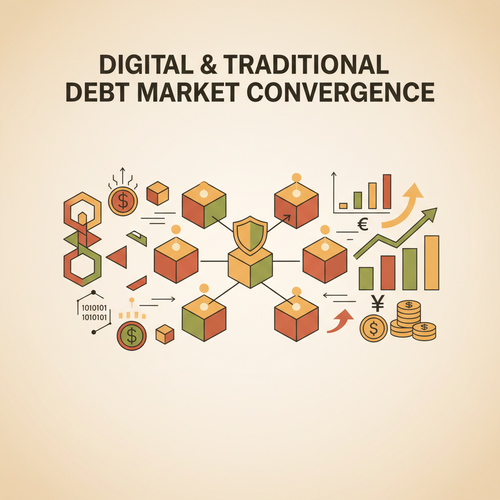
The trajectory for institutional debt issuance protocols points towards significant market convergence. Traditional finance infrastructure will increasingly integrate with DLT. This hybrid ecosystem promises greater efficiency and reduced costs. The potential for market disruption is substantial. These protocols could redefine how debt is issued, traded, and managed globally. They democratize access to capital markets.
Challenges to widespread adoption persist. Regulatory uncertainty remains a primary concern. The need for standardized legal frameworks is pressing. Education and talent development are also critical. Financial professionals require new skill sets for this evolving landscape. However, the benefits of transparency, automation, and enhanced liquidity are compelling. These drive continued institutional interest and investment.
Projections indicate robust growth in tokenized securities markets. This includes a significant portion dedicated to fixed-income instruments. Innovation will accelerate as more institutions participate. New financial products and services will emerge. These protocols are poised to become a fundamental component of future capital markets. Their transformative impact will reshape global financial architecture significantly.
Conclusion
Institutional debt issuance protocols represent a pivotal advancement in fixed-income investing. They offer compelling avenues for yield generation. Enhanced efficiency and transparency define these new frameworks. Strategic implementation requires navigating complex technological and regulatory landscapes. Institutions must understand their core mechanics thoroughly. Risk mitigation strategies are also paramount.
These protocols facilitate a paradigm shift. They move from legacy systems to a digitized, automated future. Early adopters gain a significant competitive advantage. The convergence of traditional and decentralized finance is inevitable. This evolution promises more resilient and accessible capital markets. Are you prepared to leverage these innovative protocols for your fixed-income portfolio?