
Executive Summary
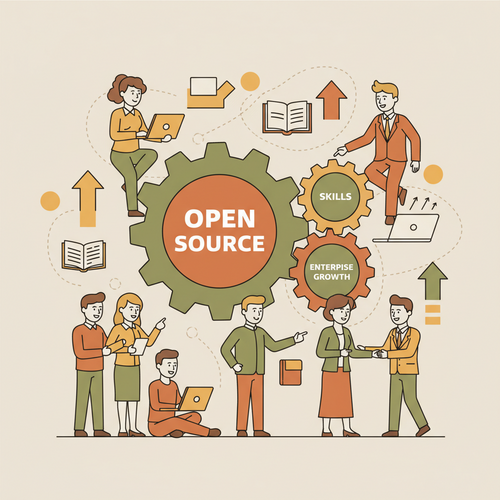
- Open-source academic frameworks systematically mitigate human capital depreciation across global enterprise operations.
- Decentralized pedagogical infrastructure completely eliminates exorbitant proprietary SaaS licensing capital expenditures.
- Algorithmic competency tracking mathematically optimizes internal talent mobility and accelerates institutional ROI.
Integrating open-source academic frameworks remains a strict, uncompromising strategic imperative. Modern global enterprises face unprecedented, violent volatility in overarching workforce demands. Continuous, rapid technological advancements frequently render established corporate skill sets obsolete. This systemic decay creates massive, highly measurable technical skill gaps globally. Addressing this catastrophic deficit is no longer a peripheral administrative function. It represents an absolute mandate for long-term institutional survival.
The macroeconomic impact of a stagnant corporate workforce remains absolutely profound. Aggregate corporate productivity growth stagnates rapidly without continuous intellectual capital injection. Overarching innovation cycles slow dramatically, destroying hard-earned global market share. Companies struggle endlessly with expensive, highly competitive talent arbitrage in specialized domains. Digital fluency and specialized technical competencies are strictly paramount for modern leadership. The talent crisis demands highly agile, adaptive digital learning solutions globally.
The Macroeconomic Threat of Human Capital Depreciation
Traditional, proprietary learning management systems frequently prove incredibly inflexible and prohibitively expensive. They force enterprises into rigid, pre-defined pedagogical models that resist rapid adaptation. Board members and C-suite executives must prioritize building robust talent development pipelines. Relying strictly on external executive recruitment aggressively drains vital corporate treasury reserves. Systemic upskilling remains a mandatory fiduciary obligation for corporate leadership.
Organizations must mathematically quantify the exact cost of human capital depreciation annually. When employees lack modern technical competencies, operational efficiency drops precipitously. Software deployment cycles miss highly critical, lucrative market launch windows. Competitors operating with highly trained, agile workforces immediately capture that lost share. Treating educational infrastructure as a discretionary expense is a fatal executive error. Executing enterprise talent optimization requires rigorous institutional oversight.
Capital Expenditure (CapEx) vs. Operational Agility
Legacy software platforms require massive, recurring capital expenditures for licensing fees. These closed-loop SaaS platforms dictate incredibly rigid, unscalable corporate training architectures. Vendor lock-in severely restricts institutional operational agility and technical pivoting capabilities. Conversely, open-source academic frameworks completely disrupt this highly predatory, restrictive financial model. They aggressively shift corporate investment away from pure, recurring software licensing.
Capital is instead redirected directly into custom, highly targeted content deployment. This strategic financial reallocation dramatically improves overarching corporate treasury efficiency. Decentralized principles rigorously promote absolute code transparency and continuous systemic improvement. This collaborative philosophy scales perfectly into massive, complex corporate educational deployments globally. It empowers organizations to rapidly host, modify, and distribute proprietary intellectual property.
Deconstructing Open-Source Academic Frameworks
Unlike conventional Massive Open Online Courses, these systems provide secure digital architectures. Platforms like Open edX provide highly resilient, enterprise-grade infrastructural bedrock. These powerful frameworks remain infinitely customizable and strictly horizontally extensible. Enterprises gain absolute, granular control over specific content delivery and user experience. This structural autonomy is highly critical for maintaining strict corporate branding parameters.
This autonomy actively fosters a vibrant, community-driven development model for educational resources. Strict, peer-reviewed content creation ensures absolute technical relevance and uncompromising academic quality. It completely democratizes internal access to incredibly high-caliber, specialized educational tools. Organizations can seamlessly spin up highly secure, isolated learning instances for departments. This compartmentalization ensures highly targeted, mathematically efficient pedagogical delivery across the enterprise.
Microservices and API Enterprise Integrations
Modern open-source academic frameworks utilize incredibly complex, highly efficient microservices architectures. This structural design allows for flawless, seamless integration with existing enterprise software. Critical human resources data flows effortlessly into the centralized learning management system. Application Programming Interfaces perfectly connect disparate corporate data lakes and isolated silos. This deep structural synergy creates a highly unified, frictionless digital employee experience.
Furthermore, these integrations allow for highly automated, algorithmic corporate user provisioning. When a new executive is onboarded, the system automatically assigns mandatory compliance modules. This entirely eliminates tedious, highly expensive manual administrative overhead across the organization. It mathematically guarantees that all personnel meet strict federal regulatory training requirements instantly. Automation remains the absolute key to scaling enterprise pedagogical infrastructure efficiently.
Bridging the Divide: Industry and Academic Synergy
Decentralized platforms actively foster unprecedented, highly lucrative collaboration between academia and enterprise. Elite universities globally contribute highly specialized, rigorous theoretical digital learning modules. Corporate partners subsequently inject highly relevant, actionable, real-world industrial case studies. This structural synergy creates incredibly relevant, highly deployable technical skill pathways. Executives gain immediate, unrestricted access to cutting-edge, peer-reviewed global knowledge.
This knowledge translates directly and immediately into actionable corporate operational strategies. Students and seasoned professionals mutually gain access to highly exclusive, specialized institutional knowledge. This knowledge remains directly applicable within a highly competitive, fast-paced corporate setting. The collaborative development model mitigates the internal corporate skill-gap highly effectively. Extreme academic rigor seamlessly meets relentless, fast-paced industrial demand.
Micro-Credentialing and Institutional Verification
Micro-credentials and highly specific, stackable certifications emerge as the primary structural outputs. These verifiable units of digital learning prove strict mastery of technical competencies. They systematically provide clear, mathematically irrefutable evidence of executive competency mastery. They effectively replace outdated, highly inefficient multi-year academic degree requirements completely.
Cryptographic frameworks natively issue these highly secure credentials using advanced verification protocols. This underlying technology guarantees absolute, uncompromising authenticity for internal corporate talent auditors. It completely prevents rampant resume fraud and heavily streamlines the internal promotion process. Verified competencies allow executives to deploy the exact right personnel to complex projects.
| Architectural Criteria | Proprietary SaaS LMS | Open-Source Architecture |
|---|---|---|
| Licensing Capital Expenditure | Exorbitant, recurring annual fees. | Zero foundational licensing costs. |
| Institutional Data Sovereignty | Total vendor control and lock-in. | Absolute internal corporate control. |
| Architectural Agility | Rigid, severely limited by vendor roadmap. | Infinitely customizable and horizontally scalable. |
| Security Auditing | Opaque, proprietary black-box code. | Transparent, peer-reviewed open code. |
Quantifying Human Capital ROI and Yield Metrics
Mathematically quantifying the exact Return on Investment for learning initiatives is strictly paramount. Algorithmic frameworks natively offer incredibly robust, highly granular data analytics capabilities. These quantitative insights remain absolutely critical for highly strategic executive decision-making. Key Performance Indicators must strictly include measurable time-to-competency reduction metrics.
Faster, highly targeted upskilling mathematically accelerates corporate revenue generation timelines significantly. High-performing organizations track these specific institutional capital savings incredibly meticulously. Native course completion rates and rigorous assessment scores provide baseline, audited competency data. Financial controllers explicitly translate these operational metrics directly into massive EBITDA enhancements. Optimized human capital immediately and directly impacts bottom-line institutional profitability.
Mitigating Executive Recruitment Expenditures
Retaining highly elite, specialized technical talent mathematically improves overall institutional profitability margins. Internal corporate upskilling drastically reduces catastrophic, six-figure external executive recruitment costs. Furthermore, robust internal training programs dramatically increase overarching employee retention rates globally. Overall project success rates explicitly demonstrate the mathematical impact of enhanced technical skills. Organizations can track deep engagement metrics meticulously using localized database architectures.
Peer contributions and collaborative project scores provide highly valuable, qualitative talent data. This data directly informs the continuous, relentless refinement of the corporate pedagogical strategy. The absolute transparency of decentralized platforms supports rigorous, uncompromising financial auditing. This ensures absolute, mathematical accountability for all corporate training and development expenditures. It provides verifiable, audited evidence of massive human capital intellectual uplift.
Information Security and Fiduciary Governance
Deploying powerful decentralized infrastructure absolutely demands rigorous, uncompromising information security protocols. Absolute organizational data sovereignty represents a massive, highly non-negotiable strategic corporate advantage. However, successfully managing this complex infrastructure requires highly specialized, internal DevSecOps personnel. Corporate firewalls must protect highly sensitive, proprietary employee competency data perpetually. Vulnerability patching becomes a strictly internal, highly critical fiduciary responsibility for the CIO.
Adopting complex digital architectures is certainly not without massive, structural implementation challenges. Deeply entrenched organizational culture frequently presents the absolute highest barrier to adoption. Executive resistance to decentralized, open learning models impedes highly critical integration efforts. Robust, uncompromising governance structures are mathematically and operationally essential for success. Clear corporate policies must dictate internal content creation and strict quality assurance.
Navigating Institutional Change Management
These rigid policies ensure absolute systemic consistency and pedagogical reliability globally. Strategic resource allocation also demands incredibly careful, mathematically precise executive consideration. While the software is free, flawless implementation requires highly dedicated, expensive technical personnel. Deep expertise in codebase customization and ongoing server support is strictly necessary. Data security and federal privacy concerns must be proactively, aggressively addressed.
Enterprises must ensure absolute, audited compliance with highly relevant, punitive federal data regulations. This builds massive internal user trust and perfectly protects highly sensitive corporate information. Highly effective, strategic change management strategies remain crucial for widespread institutional adoption. Continuous corporate communication, mandatory training, and executive champion programs foster deep internal buy-in. They systematically transform initial employee skepticism into highly enthusiastic, mandatory platform participation.
Algorithmic Competency Tracking and Predictive Models
The future trajectory of digital learning architecture relies entirely upon artificial intelligence. Algorithmic integration will hyper-personalize the entire corporate digital learning experience completely. Complex machine learning models recommend highly specific, targeted technical resources completely automatically. These advanced algorithms mathematically analyze individual employee learning styles and historical assessment performance. This completely optimizes the ultimate velocity of total institutional knowledge acquisition globally.
Predictive analytics accurately identify devastating internal corporate skill gaps long before they materialize. This highly proactive, algorithmic approach allows for immediate, surgical pedagogical intervention by management. It massively enhances overall organizational resilience against sudden, violent macroeconomic market shifts. The ongoing development of open-source meta-frameworks will further streamline massive enterprise integration. This will create a vastly more interconnected, highly interoperable global learning ecosystem.
Decentralized Ledger Technology for Credentialing
Furthermore, blockchain technology will permanently secure all institutional micro-credentials natively. Distributed cryptographic ledgers provide absolute, immutable proof of corporate skill attainment globally. Open-source developmental models will aggressively drive this specific, massive technological integration natively. Syntactic interoperability across disparate corporate systems remains a highly critical, foundational objective. These massive technological advancements permanently solidify the dominance of open-source pedagogical models.
Conclusion
Ultimately, open-source academic frameworks represent a massive paradigm shift in corporate learning. They aggressively democratize elite enterprise skill acquisition efficiently and highly securely. This powerful infrastructure absolutely empowers organizations to navigate increasingly complex, global talent landscapes. The strict strategic imperative for continuous, algorithmic corporate learning remains mathematically undeniable. These frameworks provide the exact mathematical tools to build a deeply resilient corporate workforce. Executives achieve massive, unprecedented human capital optimization while heavily reducing recurring licensing expenditures. This directly and permanently impacts long-term institutional profitability and absolute global market dominance. How will your executive board deploy decentralized infrastructure to eliminate internal technical skill gaps this quarter?