
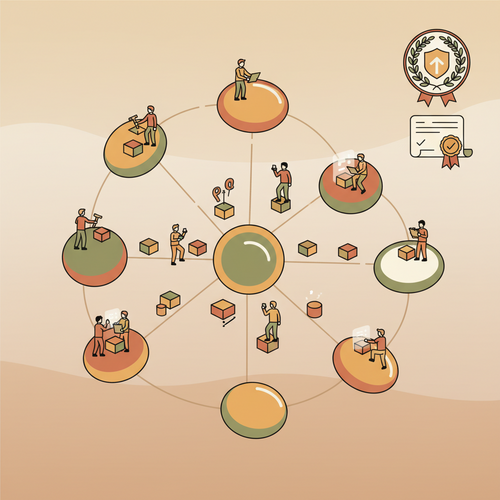
Executive Summary
- Open-Access Enterprise Frameworks completely democratize massive digital transformation initiatives globally.
- Scalable competency certification mathematically validates rapidly evolving institutional skill sets.
- Strategic integration of these specific concepts drives absolutely massive ROI and operational excellence.
The Paradigm Shift: Democratizing Enterprise Architecture
Open-Access Enterprise Frameworks fundamentally disrupt traditional, highly restrictive corporate software deployment models. Historically, global enterprise architecture relied entirely on massively expensive, proprietary, monolithic IT systems. Consequently, this outdated model intentionally created severe vendor lock-in and completely stifled internal corporate innovation. Open-access architectures present a highly necessary, entirely fundamental macroeconomic paradigm shift. They actively advocate for highly transparent, aggressively collaborative global development environments.
From a purely financial perspective, this strategic approach significantly reduces massive infrastructural barriers to entry. Chief Information Officers (CIOs) can rapidly deploy complex technological solutions without incurring catastrophic capital expenditures (CapEx). Furthermore, these dynamic frameworks allow for unprecedented, highly agile pivoting during severe macroeconomic downturns. The days of multi-year, multi-million-dollar software licensing contracts are rapidly coming to a definitive end. Financial agility requires absolute technological agility.
Understanding exactly what these frameworks entail is strictly critical for modern corporate leadership. They are highly robust, foundational software structures designed specifically with entirely open global standards. Furthermore, they heavily utilize highly vetted, community-driven open-source software components. Consequently, these frameworks facilitate incredibly rapid, widespread global corporate adoption and deep, granular customization. They strictly prioritize seamless technological interoperability across highly diverse, highly fragmented legacy corporate IT stacks.
Adopting these decentralized systems is no longer optional; it is a strict strategic imperative for survival. It mathematically enhances massive organizational agility and drastically accelerates complex global digital transformation timelines. Global enterprises instantly gain unprecedented, highly lucrative flexibility in their core technology choices. Additionally, they mathematically mitigate severe operational risks associated with dangerous single-vendor institutional reliance. You can explore fundamental concepts of decentralization at Investopedia’s DeFi Guide.
Architectural Modularity and Interoperability Drivers
Strict architectural modularity is absolutely crucial for highly agile, modern global corporate enterprises. Specifically, it allows for the entirely independent, rapid development and localized deployment of specific software components. Seamless interoperability mathematically ensures flawless, instant communication between these massive, highly disparate global software modules. Open-Access Enterprise Frameworks naturally and perfectly align with these specific, highly coveted architectural goals. They aggressively promote a highly efficient, loosely coupled internal corporate system design.
Leveraging strict API-first design principles is absolutely central to maximizing these specific frameworks. It mathematically ensures highly robust, universally understood, and flawlessly documented digital application interfaces. Consequently, these specific APIs enable perfectly seamless, rapid integration with highly critical external vendor services. They also heavily support massive internal system cohesion across previously siloed global corporate departments. This specific approach actively fosters a highly composable, incredibly resilient global enterprise.
Standardization is a massive, highly lucrative core economic benefit of these open-access models. It mathematically ensures perfectly consistent global data formats and highly secure, standardized communication protocols. This dramatically simplifies incredibly complex, multi-jurisdictional corporate ecosystem integrations globally. Consequently, businesses can drastically more easily and cheaply onboard massive new international supply chain partners. Global supply chains instantly become exponentially more transparent, infinitely more resilient, and massively efficient.
Expert Insight: “From a strict institutional operational standpoint, leveraging standardized, open frameworks significantly streamlines complex M&A integrations. They provide an absolutely undeniable, mathematically verifiable audit trail of system capabilities, drastically reducing integration friction and cost.”
Scalable Competency Certification: A Human Capital Mandate
The incredibly rapid, violent evolution of global technology demands absolutely dynamic, continuous skill validation. Static, outdated legacy certifications quickly become entirely obsolete financial liabilities for the enterprise. Scalable competency certification directly and aggressively addresses this massive corporate human capital challenge. It mathematically ensures the global workforce possesses entirely relevant, highly up-to-date, actionable technical capabilities. This is absolutely vital for sustaining massive technological momentum and market dominance.
Validating deep technical expertise in highly dynamic corporate environments requires rigorous, continuous micro-assessment. Traditional, highly biased annual HR reviews are entirely insufficient and financially dangerous. Modern competency certification must strictly reflect highly practical, immediate application of complex technical knowledge. It should rigorously assess complex problem-solving capabilities within highly stressful, real-world corporate macroeconomic scenarios. This strictly ensures highly expensive employee skills remain perfectly pertinent and financially impactful.
Enterprise blockchain technology offers entirely immutable, mathematically verifiable credentialing software solutions globally. It provides absolutely undeniable, cryptographically secure records of individual technical skill attainment. Micro-certifications focus intensely on highly specific, extremely granular, immediately deployable corporate competencies. These significantly smaller units of accelerated learning are rapidly acquirable and instantly measurable. Combining enterprise blockchain with micro-certifications creates a massively robust, highly agile internal validation system. We detail this further in our internal human capital strategy guide.
Operationalizing Frameworks: Implementation Protocols
The highly successful, profitable implementation of Open-Access Enterprise Frameworks requires incredibly careful, highly strategic planning. It fundamentally involves significantly more than just basic, rudimentary technical software deployment. Massive corporate cultural shifts and highly rigorous internal governance models are equally, if not more, critical. Executing strict, institutional-grade best practices strictly ensures highly sustainable, long-term corporate operationalization.
Decentralized internal software development strictly thrives on incredibly robust, highly authoritative corporate governance. Absolutely clear, non-negotiable guidelines for code contribution and long-term maintenance are strictly essential. Highly structured, community-driven internal oversight actively fosters massive accountability among distributed global engineering teams. It mathematically ensures framework evolution aligns perfectly with strictly defined corporate strategic financial objectives. This delicate governance balance is absolutely critical for long-term, multi-million-dollar project viability.
Open-source global ecosystems inherently carry massive, highly specific cybersecurity and operational risks. Severe security vulnerabilities require absolutely constant, highly aggressive, 24/7 automated vigilance and patching. Strict software licensing compliance is absolutely paramount to completely avoid catastrophic, business-ending international legal issues. Highly robust corporate due diligence and incredibly active community engagement mathematically mitigate these severe risks. Enterprises must strictly implement massive, highly comprehensive, zero-trust internal security protocols instantly.
Economic Value Proposition: ROI and Alpha Generation
Investing massive institutional capital in Open-Access Enterprise Frameworks yields incredibly substantial economic returns. It extends far beyond mere superficial, short-term corporate cost savings. The true, massive financial value lies in drastically enhanced, highly aggressive internal corporate innovation capacity. This directly and mathematically translates into a significantly stronger, highly defensible global competitive advantage. It is the ultimate corporate financial force multiplier.
These specific frameworks actively leverage massive, highly vetted shared global software resources. This specifically includes billions of lines of community-contributed code and highly detailed technical documentation. Consequently, internal corporate development costs are mathematically and significantly reduced across the board. Global enterprises completely avoid massively expensive, highly restrictive proprietary software licensing fees entirely. This massive reallocation of institutional capital directly fuels highly aggressive, further technological innovation.
Highly agile, continuous software development is entirely inherent to these open-access corporate models. It mathematically shortens massive corporate innovation cycles dramatically, saving millions in R&D costs. Consequently, global enterprises can incredibly rapidly prototype and deploy entirely new, highly disruptive software solutions. This drastically enhanced global market responsiveness is absolutely critical for long-term corporate survival. It allows for incredibly quick, profitable adaptation to rapidly changing global consumer demands. Review basic ROI concepts at Investopedia’s ROI Definition.
Navigating Regulatory Compliance and Data Sovereignty
Operating massive global businesses within open-access paradigms introduces highly specific, incredibly punitive regulatory considerations. Global corporate data governance is particularly complex, dangerous, and legally fraught. Multinational enterprises must constantly navigate incredibly diverse, highly conflicting international compliance landscapes. Strict adherence to massive global and regional privacy statutes (like GDPR) is absolutely non-negotiable. Open-Access Enterprise Frameworks must be architected with compliance as the foundational layer.
Federated global IT systems inherently involve massively distributed corporate data and micro-services. This extreme architectural complexity strictly necessitates highly advanced, military-grade internal security measures. Absolute end-to-end, zero-knowledge cryptographic encryption is fundamentally and strictly required. Highly rigorous, continuous access control mechanisms and identity verification protocols are absolutely vital. Regular, highly aggressive external penetration testing instantly uncovers potentially catastrophic software vulnerabilities.
Data sovereignty laws vary wildly and significantly across highly diverse international jurisdictions globally. These frameworks must flawlessly and automatically accommodate these massive, highly complex legal differences. Strict local data localization requirements completely dictate internal corporate architecture design and physical server placement. Furthermore, massive cross-border data transfers demand incredibly careful, highly specialized international legal review constantly. Geopolitical factors directly and massively impact all global corporate operational IT strategies.
Framework Comparison Analysis
| Framework Architecture | Initial Capital Expenditure | Customization Capability | Vendor Lock-In Risk |
|---|---|---|---|
| Legacy Monolithic Systems | Extremely High | Very Low | Critical/Severe |
| Cloud-Based Proprietary SaaS | Moderate (Recurring) | Moderate | High |
| Open-Access Enterprise Models | Low to Moderate | Infinite/Maximum | Zero |
| Hybrid Federated Systems | High | High | Moderate |
Future Trajectories: AI-Driven Framework Evolution
The massive convergence of Open-Access Enterprise Frameworks and generative artificial intelligence is highly transformative. Specifically, advanced AI will massively enhance total framework capabilities and automated code generation. It will also completely refine and automate highly complex internal competency certification processes. This specific technological synergy promises entirely unprecedented levels of corporate automation and financial insight. Humans will merely oversee the algorithms managing the enterprise.
Highly advanced, AI-driven predictive analytics can instantly identify massive emerging corporate skill gaps globally. It rapidly analyzes millions of data points regarding industry trends and highly specific project requirements. Consequently, massive global organizations can incredibly proactively train their entire workforce automatically. This mathematically minimizes future, highly expensive technical talent shortages before they actually occur. It strictly ensures absolutely continuous, highly profitable global operational corporate readiness.
Furthermore, AI will directly enable these complex frameworks to physically adapt entirely autonomously. It can mathematically optimize massive global cloud resource allocation dynamically in real-time. Severe system performance bottlenecks will be instantly identified and automatically resolved without human intervention. This massive, self-healing capability drastically enhances total global system resilience and corporate uptime. It drastically reduces the expensive need for highly paid, manual human IT intervention.
Conclusion
In conclusion, Open-Access Enterprise Frameworks represent an absolute, non-negotiable strategic corporate imperative today. They mathematically drive massive global digital transformation and violently foster aggressive corporate innovation. Global organizations instantly gain entirely unparalleled, highly lucrative operational agility and system resilience. Adopting these specific paradigms absolutely ensures future, highly profitable corporate relevance globally. This strategic technological integration is strictly crucial for long-term, multi-generational corporate success. Is your global enterprise fully prepared to embrace this massive, inevitable architectural evolution?