
Executive Summary
- Decentralized Academic Protocols (DAPs) are revolutionizing human capital monetization.
- These protocols enable individuals to leverage intellectual assets asynchronously and disproportionately.
- The paradigm shift redefines value capture within the knowledge economy, attracting sophisticated capital.
The Evolving Paradigm of Human Capital Valuation
Traditional human capital valuation often relied on static employment contracts. This model limited an individual’s earning potential. It constrained the fluid, dynamic nature of specialized knowledge. Emerging economic models necessitate a more agile framework for talent. They recognize the intrinsic value of intellectual output.
The digital age created latent human capital. This capital remains largely untapped within conventional structures. Asymmetric monetization seeks to unlock this dormant value. It allows individuals to capture a greater share of their created worth. This approach moves beyond hourly wages or fixed salaries. It focuses on value-based outcomes and scalable contributions.
Understanding this shift is crucial for strategic investment. Firms and individuals must adapt their frameworks. They should recognize intellectual property as a distinct asset class. Its liquidity and fungibility are increasingly important. This market evolution demands new infrastructural support.
Unpacking Decentralized Academic Protocols (DAPs)
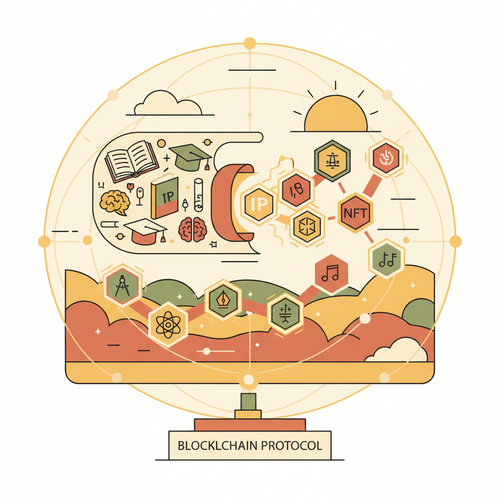
Decentralized Academic Protocols (DAPs) represent a foundational shift. They utilize blockchain technology and cryptographic primitives. These protocols facilitate the verification, storage, and exchange of academic credentials. They also manage intellectual property rights. DAPs democratize access to knowledge and expertise. They bypass traditional centralized gatekeepers.
Core to DAPs are immutable ledgers and smart contracts. These ensure transparency and tamper-proof record-keeping. InterPlanetary File System (IPFS) often stores associated academic artifacts. This distributed storage enhances data resilience. It also promotes censorship resistance. DAPs fundamentally reshape the academic credentialing landscape.
Unlike conventional universities, DAPs offer disaggregated services. They allow for granular credentialing of specific skills. They enable fractional ownership of research outcomes. This model promotes a meritocratic system. It rewards demonstrated expertise over institutional affiliation. This distinction attracts innovators and capital alike.
Expert Insight: “The disaggregation of academic services via DAPs presents a formidable challenge to legacy accreditation bodies. It forces a re-evaluation of how intellectual provenance is authenticated and valued in a globally connected, trustless environment. Early adopters will gain substantial first-mover advantage.”
Mechanisms for Asymmetric Human Capital Monetization
Asymmetric monetization through DAPs offers diverse avenues. One primary method involves the tokenization of intellectual property (IP). Researchers can issue non-fungible tokens (NFTs) representing specific findings. These tokens grant fractional ownership or access rights. They create immediate liquidity for research outcomes.
Skill-based NFTs also emerge as a powerful tool. Individuals can mint NFTs verifying mastery in specific domains. These digital assets are verifiable and transferable. Employers or collaborators can then purchase access or services. This provides direct remuneration for validated expertise. It removes intermediary friction.
- Research Tokenization: Converting novel findings into tradable digital assets.
- Skill NFTs: Cryptographically verifiable representations of specific competencies.
- DAO-Governed Bounties: Decentralized Autonomous Organizations fund research directly.
- Peer-to-Peer Knowledge Exchange: Direct transactions for expert consultations or educational modules.
Decentralized Autonomous Organizations (DAOs) play a critical role. They can pool capital for research grants or bounties. Contributors receive tokens based on their impact. This incentivizes collaboration and innovation. It also ensures transparent fund allocation. This model significantly decentralizes funding mechanisms.
Operationalizing DAPs: Technical Architecture and Interoperability
Operationalizing Decentralized Academic Protocols requires robust technical architecture. Core components include a secure blockchain network. This network must support smart contract execution. It ensures the integrity of academic records. Layer-2 scaling solutions are often integrated. They address potential throughput limitations. This optimizes transaction costs and speed.
Data standards and interoperability are paramount. DAPs must communicate seamlessly across different blockchain ecosystems. This enables cross-platform credential verification. It also facilitates asset transfer. Open APIs and standardized data formats are crucial. They prevent data silos. They enhance the utility of digital academic assets.
Security measures are integral to DAP reliability. This includes rigorous smart contract auditing. It also involves robust key management protocols. The immutability of blockchain ensures historical record integrity. However, front-end security remains a critical consideration. User data privacy is also a constant design constraint. Human capital investments within DAPs demand this rigor.
| Feature | Traditional Academic System | Decentralized Academic Protocol (DAP) |
|---|---|---|
| Credential Verification | Centralized institution, manual process | Immutable blockchain ledger, cryptographic proof |
| Intellectual Property | Institutional ownership, complex licensing | Tokenized ownership, granular rights, direct monetization |
| Funding Mechanism | Grants, tuition fees, endowments | DAO-governed bounties, token sales, fractional investment |
| Access & Inclusivity | Geographic & financial barriers | Global, permissionless, merit-based participation |
Economic Implications and Investor Calculus
The economic implications of DAPs are profound. They create entirely new asset classes. These are derived from intellectual output and validated expertise. Investors can now gain exposure to human capital directly. This contrasts sharply with traditional equity or bond markets. It offers diversified portfolio opportunities.
Risk-adjusted returns for intellectual assets are a novel concept. Due diligence involves assessing the utility and demand for specific knowledge tokens. It also includes evaluating the underlying protocol’s governance. The potential for exponential growth exists. This occurs when novel research gains widespread adoption. Decentralized Finance (DeFi) principles are highly relevant here.
DAPs disrupt the venture capital landscape. They allow for pre-seed and seed-stage intellectual property funding. This bypasses traditional gatekeepers. It offers more equitable access to capital for innovators. It also provides immediate liquidity for early-stage intellectual assets. This paradigm shift democratizes investment access significantly.
Navigating Regulatory Ambiguity and Ethical Frameworks
Regulatory ambiguity presents significant hurdles for DAPs. Jurisdictions globally struggle to classify digital assets. Are knowledge tokens securities? Are they utility tokens? Clear legal frameworks are still developing. This uncertainty can deter institutional adoption. It also impacts market stability for these novel assets.
Intellectual property rights within a decentralized context are complex. Establishing clear ownership and enforcement mechanisms is vital. Smart contracts can embed IP rules. However, off-chain legal recourse remains necessary. Harmonizing on-chain and off-chain legal structures is an ongoing challenge. It requires collaboration between technologists and legal experts.
Ethical considerations are equally critical. Data privacy, especially concerning academic records, must be prioritized. Preventing plagiarism and ensuring attribution are paramount. Fair value distribution among contributors is also a key design principle. DAPs must uphold academic integrity in a trustless environment. This requires robust governance models and community consensus.
Case Studies and Emerging Market Dynamics
Emerging market dynamics showcase early DAP adoption. One hypothetical case involves a consortium of independent researchers. They form a DAO to fund a pivotal scientific study. Research outcomes are tokenized. These tokens grant royalties from subsequent commercial applications. This model offers direct, transparent reward distribution. It fosters a truly collaborative research ecosystem.
Another example involves a professional development platform. It issues verifiable skill NFTs to its users. These NFTs unlock exclusive project opportunities. They also provide access to premium networking events. This creates a liquid market for authenticated professional competencies. It directly aligns incentives for skill acquisition and application.
The future market projects substantial growth for DAPs. Integration with metaverse platforms could create immersive learning environments. These environments offer tokenized educational experiences. This expands the monetization potential for academic content creators. The intersection of Web3 and education is a major growth vector. It attracts significant capital and talent inflows.
Conclusion
Asymmetric human capital monetization through Decentralized Academic Protocols marks a transformative era. It empowers individuals. It offers novel pathways for intellectual property valuation and exchange. The shift from traditional, centralized models is irreversible. This new paradigm fosters unprecedented liquidity for knowledge assets. It demands a sophisticated understanding of protocol economics and digital asset management. How will your organization adapt to these decentralized paradigms to unlock unparalleled human capital value?