
Executive Summary
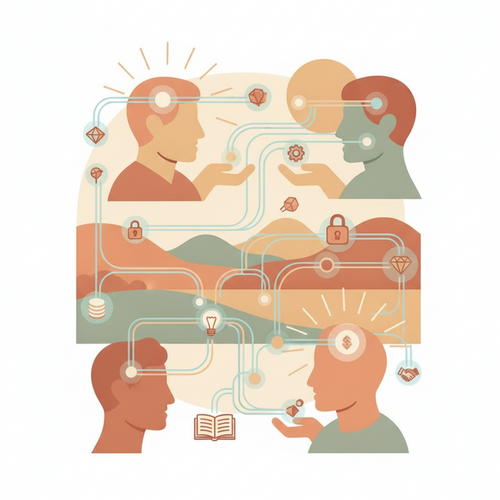
- Decentralized knowledge distribution redefines human capital development.
- Open-source learning systems foster skill acquisition and verifiable credentialing.
- This paradigm shift enables direct monetization of specialized expertise.
The Evolving Landscape of Human Capital Development
Traditional educational models face increasing obsolescence. Rapid technological advancements necessitate agile skill acquisition. The global workforce demands continuous upskilling and reskilling initiatives. Human capital, traditionally a balance sheet intangible, now requires dynamic, verifiable enhancement. Organizations seek measurable returns on learning investments.
Centralized educational institutions often lag market demands. Curricula updates can be slow and bureaucratically cumbersome. This creates skill gaps across critical industries. The challenge intensifies with the accelerating pace of innovation. A new framework for knowledge transfer becomes imperative.
In analyzing recent market shifts, enterprises prioritizing adaptive learning platforms demonstrate superior talent retention. This agility translates directly into enhanced competitive advantage. The future of work is intrinsically linked to continuous, accessible education.
Decentralized knowledge distribution offers a potent counter-narrative. It promises a more responsive and equitable ecosystem. Open-source learning systems form the bedrock of this transformation. They democratize access to high-value information and training. This fosters a global talent pool. Each participant can contribute and benefit directly from collective intelligence.
The shift empowers individuals to own their learning journey. It enables self-directed professional growth. Furthermore, it allows for the granular monetization of acquired proficiencies. This represents a fundamental re-evaluation of human capital as a liquid asset class.
Architectural Foundations of Open-Source Learning Systems
Open-source learning platforms leverage distributed ledger technology. Blockchain networks provide immutable records of achievement. This ensures transparent and verifiable credentialing. InterPlanetary File System (IPFS) hosts course materials securely. This removes centralized data silos and censorship risks.
Smart contracts automate learning pathways and reward distribution. They define conditions for skill validation. Upon completion, digital certificates are issued. These are tamper-proof and globally recognized. This system reduces administrative overhead significantly.
Peer-to-peer (P2P) networks facilitate direct knowledge exchange. Learners interact with mentors and subject matter experts. This fosters collaborative problem-solving environments. It moves beyond traditional instructor-centric models. The network itself becomes a dynamic learning organism.
Decentralized Autonomous Organizations (DAOs) govern many such systems. Community members vote on curriculum development. They determine resource allocation and quality assurance standards. This ensures relevance and responsiveness to market needs. It cultivates a robust, self-sustaining ecosystem.
API integrations with existing enterprise learning management systems are crucial. This allows for seamless adoption within corporate structures. It bridges the gap between legacy and emergent technologies. The architecture emphasizes interoperability and modularity. This promotes a truly adaptive learning infrastructure.
Human Capital Monetization: Mechanisms and Strategies
The direct monetization of human capital represents a core innovation. Individuals can tokenize their specialized skills. These tokens represent verifiable proficiency in specific domains. Employers or clients can then acquire these digital assets. This creates a liquid market for expertise.
Skill-based micro-payments enable granular compensation. Professionals earn for specific tasks or knowledge contributions. This contrasts sharply with traditional salaried employment. It fosters a gig economy model on a more secure foundation. Smart contracts automatically disburse funds upon task completion.
Decentralized Autonomous Organizations (DAOs) facilitate talent pooling. Members with complementary skills collaborate on projects. Revenue shares are predetermined by smart contract. This provides equitable remuneration for collective effort. It removes intermediary fees and bureaucratic hurdles.
Verifiable credentials unlock global opportunities. Digital certificates from open-source platforms are universally recognized. This eliminates the need for costly, time-consuming transcript verification. Professionals can rapidly prove their competencies. This streamlines hiring processes internationally.
Lifelong learning incentives are embedded within these systems. Earning tokens or reputation points encourages continuous skill development. The more expertise accumulated, the higher the monetization potential. This fosters a virtuous cycle of learning and earning. It aligns individual growth with economic benefit.
Macroeconomic Impact and Global Talent Democratization
Decentralized knowledge distribution fosters unparalleled economic inclusivity. It reduces significant barriers to entry for education. Individuals in emerging markets gain access to premium learning resources. This levels the global playing field for high-value skills. Economic empowerment becomes globally distributed.
Global talent mobility significantly increases. Verified digital credentials allow professionals to seamlessly relocate or work remotely. National borders become less restrictive for talent acquisition. Companies can access a far wider pool of skilled individuals. This optimizes labor market efficiency.
Equitable access to advanced learning curtails brain drain in developing nations. Local talent can acquire specialized skills without emigration. They can then contribute directly to their domestic economies. This creates a robust, localized knowledge economy. It supports sustainable national development.
The cost efficiencies are profound. Open-source models eliminate high tuition fees and institutional overhead. This frees up capital for other investments. Both individuals and governments benefit from these reduced expenditures. Education becomes a public good, not a luxury.
This paradigm shift drives innovation across sectors. A more skilled, globally interconnected workforce accelerates technological progress. It fosters interdisciplinary collaboration. The macroeconomic implications point towards enhanced global productivity and prosperity. It represents a new era of human capital optimization.
Navigating Challenges and Evolving Regulatory Frameworks
Scalability remains a primary technical challenge. Blockchain networks must handle high transaction volumes. Efficient data storage for extensive course materials is essential. Interoperability between disparate open-source platforms requires standardized protocols. These technical hurdles demand continuous innovation.
Quality control mechanisms are paramount. Ensuring the pedagogical rigor of open-source content is critical. Peer review systems and reputation scores help maintain standards. Community governance models must effectively weed out low-value contributions. Maintaining content integrity is non-negotiable.
Data privacy and security concerns are also prominent. Decentralized systems must protect user learning data. Compliance with global regulations like GDPR is crucial. Secure identity management within these ecosystems requires robust solutions. Anonymity and data ownership are key user assurances.
The evolving regulatory landscape presents unique complexities. Digital credentials may require legal recognition from established bodies. The tokenization of human capital intersects with securities law. Jurisdictional differences create a fragmented compliance environment. Clear guidelines are necessary for widespread adoption.
Mitigating the digital divide is another significant hurdle. Access to reliable internet and necessary hardware is not universal. Efforts must focus on bridging this infrastructure gap. Otherwise, the benefits of decentralized learning remain inaccessible to many. Inclusive design principles are vital for equitable reach.
Strategic Implementation for Enterprises and Individuals
Enterprises should integrate open-source learning into L&D strategies. Pilot programs can test verifiable credentialing systems. Companies can sponsor development of relevant open-source course modules. This aligns internal skill development with cutting-edge external resources. It fosters an innovation culture.
Individuals should proactively engage with these platforms. Identify high-demand skills and pursue accredited open-source courses. Build a verifiable digital portfolio of achievements. This strengthens professional profiles for future opportunities. It positions individuals as proactive lifelong learners.
Investors should evaluate emerging decentralized education platforms. Focus on projects with robust governance and clear monetization models. Assess the scalability of their underlying technology. Consider the network effect and community engagement metrics. These platforms represent a significant growth sector.
- Implement verifiable credential APIs for talent acquisition.
- Develop internal tokenomics for skill recognition and rewards.
- Participate in relevant DAO governance for curriculum shaping.
- Encourage employees to earn open-source skill certifications.
Strategic partnerships between corporations and open-source communities are essential. This co-creation model accelerates development and adoption. It ensures the content remains relevant to industry demands. This collaborative approach maximizes collective human capital potential.
Future Trajectories: AI, Adaptive Learning, and the Metaverse
The convergence of decentralized learning with artificial intelligence is imminent. AI-powered adaptive learning paths will personalize educational experiences. Algorithms will identify skill gaps and recommend tailored content. This optimizes learning efficiency dramatically. It ensures highly individualized professional development.
Machine learning can validate skill acquisition more effectively. AI agents can assess practical application of knowledge. This moves beyond traditional multiple-choice evaluations. It provides more nuanced, performance-based credentialing. The verification process becomes increasingly sophisticated.
The metaverse presents immersive learning environments. Virtual reality and augmented reality can simulate real-world scenarios. This allows for hands-on skill development in a safe, scalable space. Decentralized identity and ownership within the metaverse will secure credentials. Learning becomes experiential and highly engaging.
AI will also play a role in content generation. It can assist in creating modular, high-quality open-source learning materials. This reduces the burden on human educators. It accelerates the expansion of available knowledge resources. The learning ecosystem becomes self-augmenting.
These integrations promise a revolutionary shift in human potential. The future points to hyper-personalized, globally accessible, and verifiable education. It will drive unprecedented levels of human capital monetization. The boundaries between learning, working, and earning will further blur.
Conclusion
Decentralized knowledge distribution fundamentally reshapes human capital paradigms. Open-source learning systems unlock unprecedented access to education. They empower individuals through verifiable skill monetization. This new architecture supports global talent mobility and economic equity.
Enterprises and professionals must strategically embrace these innovations. Adapting to this decentralized framework is crucial. It ensures sustained relevance in a rapidly evolving global economy. The future of talent development is inherently collaborative and open-source.
Are organizations prepared to fully leverage the transformative power of decentralized human capital?