
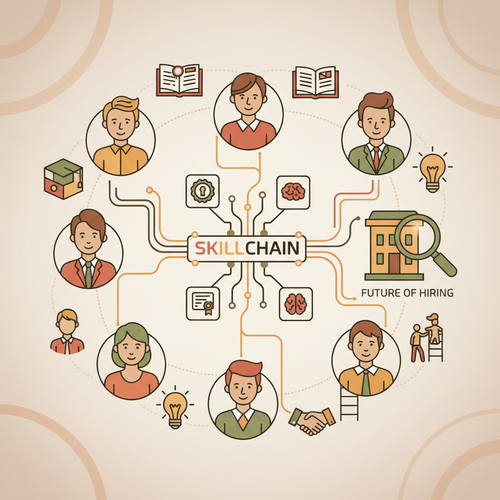
Executive Summary
- Decentralized educational frameworks are fundamentally reshaping enterprise talent acquisition and development.
- Blockchain technology underpins immutable credentialing and verifiable skill validation, enhancing trust and efficiency.
- This paradigm shift empowers individuals, disintermediates traditional gatekeepers, and optimizes organizational human capital strategies.
The Genesis of Decentralized Learning Ecosystems
The global enterprise landscape demands unparalleled agility. Traditional education models often struggle with rapid skill obsolescence. Decentralized educational frameworks offer a potent antidote to this challenge. They represent an epistemological shift in how knowledge is acquired and validated.
These systems leverage distributed ledger technology. They create resilient, transparent, and user-centric learning environments. This model moves beyond centralized institutions. It empowers learners with direct ownership of their educational journey and credentials.
Blockchain’s Role in Credential Verification and Skill Validation
Blockchain technology forms the immutable backbone of decentralized education. It ensures the verifiable authenticity of academic achievements and professional competencies. Each completed course or mastered skill can be recorded as a unique, cryptographically secured entry. This creates a tamper-proof digital transcript.
Enterprises gain immediate, trustworthy access to applicant qualifications. This eliminates fraudulent claims and reduces vetting overheads. Skill validation becomes a transparent process. It fosters greater confidence in talent pipelines.
For a deeper understanding of this foundational technology, refer to Blockchain.
Immutable Ledgers and Verifiable Attestations
Immutable ledgers offer an unparalleled level of data integrity. Once recorded, skill attestations cannot be altered. This ensures a reliable history of professional development. It builds a robust profile for every individual.
Verifiable attestations streamline hiring processes. Recruiters can instantly confirm credentials. This accelerates talent acquisition cycles significantly. It mitigates risks associated with unverified claims.
DAO Governance Models for Talent Development
Decentralized Autonomous Organizations (DAOs) are pivotal in governing these new educational paradigms. DAOs enable community-driven curriculum development and resource allocation. Stakeholders, including learners, educators, and industry partners, participate in collective decision-making. This fosters a truly democratic learning environment.
This governance model aligns educational offerings directly with market demand. It ensures curricula remain relevant and cutting-edge. It minimizes bureaucratic inefficiencies common in centralized systems. Decisions are transparent and auditable.
Explore the intricacies of these organizational structures at Decentralized Autonomous Organization (DAO).
Community-Driven Curriculum Evolution
DAOs facilitate dynamic curriculum evolution. Proposals for new courses or skill modules are submitted by members. The community then votes on these initiatives. This ensures educational content directly addresses emerging industry needs.
This agility is crucial in fast-paced technological sectors. It enables rapid adaptation to new skill requirements. Enterprises benefit from a consistently updated talent pool. This direct feedback loop is invaluable.
Redefining Enterprise Talent Acquisition Strategies
Enterprises must fundamentally rethink their talent acquisition strategies. Decentralized frameworks shift the focus from institutional pedigree to verified skill mastery. This opens pipelines to a broader, more diverse pool of candidates. It prioritizes competence over conventional credentials.
Organizations can implement skill-based hiring directly. They can leverage granular digital credentials. This results in more precise talent matching. It reduces the costs associated with traditional recruitment channels.
Expert Insight: “Our analysis indicates that enterprises embracing decentralized credentialing frameworks report up to a 15% reduction in time-to-hire metrics. This efficiency gain translates directly into competitive advantage and enhanced operational agility.”
Direct Skill Matching and Predictive Analytics
Direct skill matching becomes highly efficient. Companies can programmatically search for specific, verifiable competencies. This eliminates subjective biases in initial screenings. It ensures a meritocratic selection process.
Predictive analytics also gain new dimensions. Immutable skill data can forecast future talent needs. Enterprises can proactively develop internal training programs. They can source external talent with greater foresight.
Economic Implications: Value Accrual and Talent Mobility
The economic ramifications of decentralized education are profound. It democratizes access to high-value skills, irrespective of geographic or socioeconomic barriers. Individuals can accrue verifiable digital capital in their skillsets. This enhances their market value significantly.
Talent mobility is dramatically increased. Professionals can carry their verified credentials across borders seamlessly. This fosters a global talent marketplace. It benefits both individuals and multinational corporations.
Tokenized Incentives and Micro-Credentialing
Tokenized incentives can further motivate learning and skill acquisition. Learners may earn digital tokens for completing modules. These tokens can then be redeemed for advanced courses or industry certifications. This creates a self-sustaining educational economy.
Micro-credentialing allows for granular skill recognition. Individuals can demonstrate mastery in specific, niche areas. This provides a detailed profile of their capabilities. It offers enterprises precise insights into potential hires.
Challenges and Regulatory Headwinds
Despite significant advantages, decentralized educational frameworks face challenges. Regulatory clarity remains a primary concern. Jurisdictional differences in credential recognition can impede global adoption. Standardization efforts are paramount.
Technological barriers, such as user experience and scalability, also exist. Interoperability between different blockchain platforms requires attention. Ensuring equitable access to necessary digital infrastructure is critical. This prevents a new form of digital divide.
Interoperability and Standardization Imperatives
Interoperability is a key technical hurdle. Different decentralized platforms must communicate seamlessly. This ensures a unified view of an individual’s skill portfolio. It requires industry-wide collaboration and agreed-upon standards.
Standardization bodies play a vital role. They must define common protocols for credential issuance and verification. This will accelerate widespread enterprise integration. It builds a foundation for a truly global talent ecosystem.
Implementing Decentralized Frameworks: A Strategic Roadmap
Enterprises looking to integrate decentralized frameworks require a clear strategic roadmap. Pilot programs focused on specific skill sets are an excellent starting point. Collaboration with established decentralized learning platforms can accelerate implementation.
Internal stakeholders must be educated on the benefits and operational shifts. A phased adoption approach minimizes disruption. It allows for continuous feedback and refinement. This ensures a smooth transition.
Key Implementation Milestones
- Conduct feasibility studies to identify high-impact use cases.
- Partner with leading Web3 education providers for initial pilot programs.
- Develop internal protocols for digital credential integration and verification.
- Train HR and recruitment teams on blockchain-enabled talent assessment.
- Establish a clear governance framework for ongoing decentralized learning initiatives.
Future Trajectories: Web3, AI, and Hyper-Personalized Learning Paths
The convergence of Web3, Artificial Intelligence, and decentralized education promises transformative futures. AI can personalize learning paths based on individual performance and enterprise needs. This creates highly efficient, adaptive educational journeys.
Web3 technologies will further deepen ownership and community engagement. They enable novel incentive structures and robust data privacy. These advancements collectively redefine human capital development. They unlock unprecedented opportunities for talent optimization.
Adaptive Learning Algorithms and Skill Graph Mapping
Adaptive learning algorithms will leverage AI to tailor content. They can dynamically adjust difficulty and focus areas. This optimizes learning outcomes for diverse individual needs. It maximizes engagement and retention.
Skill graph mapping, powered by AI, offers granular insights. It identifies skill gaps within the workforce. It recommends precise learning modules. This creates a highly efficient system for continuous upskilling and reskilling.
Conclusion
Decentralized educational frameworks are not merely an innovation; they are an imperative. They address critical deficiencies in traditional talent pipelines. By fostering transparency, verifiability, and learner empowerment, they unlock new economic potential. Enterprises adopting these frameworks will secure a distinct competitive advantage. They will navigate the complexities of future workforce demands more effectively.
Are your organizational strategies prepared for this fundamental shift in human capital development?